
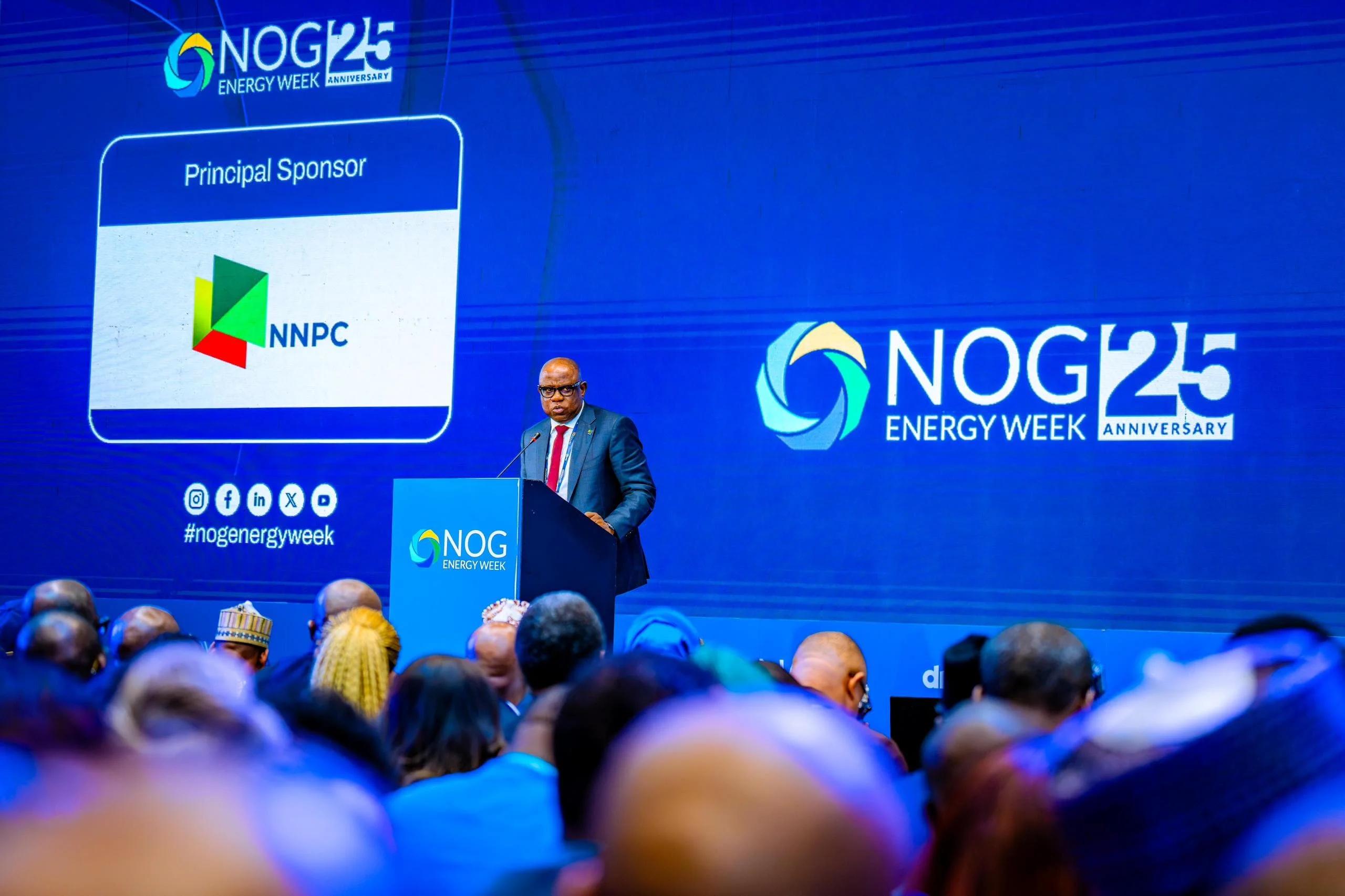
Nigeria's state oil company walked into this year's flagship energy conference with something it has rarely been able to bring in recent memory: a performance record worth defending.
NNPC Limited Group Chief Executive Officer Bashir Bayo Ojulari told the 25th NOG Energy Week in Abuja that Nigeria's crude oil production has risen to 1.71 million barrels per day, the highest level in five years, while NNPC Exploration and Production Limited achieved a record output of 365,000 barrels per day.
The gas deals at the centre of the NOG 2026 announcement are the headline figure. Ojulari revealed that the company has signed landmark Gas Sale and Purchase Agreements covering 1.29 billion standard cubic feet per day for long-term LNG feed gas and 750 million standard cubic feet per day for domestic industrial gas supply to DFL FZE and Dangote Refinery, with the agreements expected to unlock more than $20 billion in investments, with seven additional commercial transactions currently in the pipeline.
The domestic gas supply deals signed with the Dangote Group are the anchor commitments within that broader portfolio. Three subsidiaries of Dangote Industries Limited, Dangote Petroleum Refinery, Dangote Fertiliser Plant, and Dangote Cement Plc, scaled up their Gas Sales and Purchase Agreements with NNPC subsidiaries Nigerian Gas Marketing Limited and NNPC Gas Infrastructure Company Limited, with the upscaled supply agreements designed to drive the conglomerate's Vision 2030, resulting in increased output, better and cleaner energy supply, and support for ongoing expansion projects.
The refinery dimension is particularly consequential. NNPC has established a permanent on-site team at the Dangote Refinery, signalling operational integration rather than arm's-length contracting, while gas supplied under the agreements will power the 700,000-barrel-per-day facility as expansion plans proceed toward 1.4 million bpd by 2028.
The deals were unveiled alongside the Nigeria Gas Master Plan 2026. The plan targets national production of 10 billion cubic feet per day by 2027 and 12 billion cubic feet per day by 2030, and seeks to catalyse more than $60 billion in investment across the gas value chain by the end of the decade, spanning upstream development, midstream infrastructure and downstream utilisation.
Ojulari also disclosed that gas production has risen to 7.5 billion standard cubic feet per day following the completion of the River Niger crossing on the Ajaokuta-Kaduna-Kano Gas Pipeline.
On the institutional side, NNPC maintained 100% compliance with all Joint Venture cash call obligations throughout 2025 and up to June 2026, resumed full monthly remittances to the Federation Account in July 2025, reinstated monthly business performance reporting, and held its first-ever earnings call in November 2025 as part of efforts to strengthen transparency and accountability.
He also noted that NNPC recorded an average 98% operational recovery across its five crude oil export terminals between April 2025 and May 2026, a significant improvement from the operational low of about 1% recorded at the Bonny Oil and Gas Terminal in June 2022.
The 25th NOG Energy Week arrives at a moment when Nigeria's reform narrative is backed by numbers that were absent in previous years. The $20 billion in gas commitments, the 1.71 million bpd production figure, and the AKK pipeline progress together represent the most credible delivery record NNPC has presented at this forum in over a decade. The harder test, as Ojulari himself acknowledged at CERAWeek in March, is no longer whether Nigeria has the fundamentals. It is whether the execution discipline that produced these numbers can be sustained when the policy environment tightens, the global oil price softens, and the seven additional commercial transactions currently in the pipeline need to be converted into signed agreements.
Stay Informed: Visit our website for Breaking News, Intelligence, and Insight.