
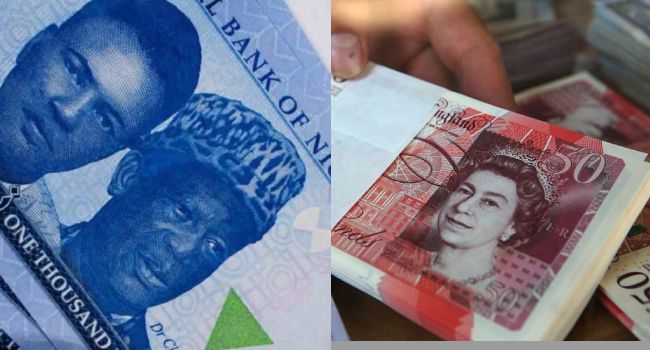
Nigeria's currency has extended its 2026 run of resilience, capitalising on a weakening British pound to push toward levels last seen more than a year ago, and this time, the trigger has come from London, not Abuja.
The naira has recovered from its April lows and shown signs of resilience through May, while the British pound hit monthly lows amid a political crisis in the UK ruling party. The pound plummeted when Manchester Mayor Andy Burnham threatened to challenge Prime Minister Keir Starmer's leadership, calling into question the future of his government and its efforts to manage the national debt.
The naira has ridden that sterling weakness purposefully. CBN data showed the naira closing near the N1,850/£1 mark by mid-May, having traded as wide as N1,882.9/£1 on the Monday of that week, a sharp intraweek recovery that reflects both sterling's political vulnerability and the CBN's continued liquidity management. The move toward N1,840/£1 represents a further extension of that recovery into the final trading days of the week.
The year-to-date picture underscores how dramatically the dynamics of this currency pair have shifted. The British pound has declined 6.57% against the naira year-to-date in 2026. The GBP/NGN rate hit its lowest point of the past 12 months at N1,795.30/£1 on March 20, 2026, compared to a high of N2,154/£1 in May 2025, representing a naira appreciation of nearly 17% over that stretch.
The naira has gained 6.92% year-to-date against sterling as of mid-May 2026, having appreciated 17.56% against the pound over the past year, a performance that cuts against the narrative of persistent naira weakness that dominated market conversations through most of 2024.
The macro tailwinds sustaining the naira's position are well established. Nigerian crude has remained above $100 per barrel in May 2026, providing stronger dollar inflow dynamics despite domestic production constraints. Nigeria's external reserves have held firm near the $50 billion threshold, reinforcing CBN’s credibility in its liquidity management approach.
The Bank of England held interest rates steady at 3.75% in a near-unanimous vote, while warning that rates may need to rise to 4% or higher later in the year if energy shocks from the Middle East conflict persist and trigger wage-price spirals in the UK, a hawkish signal that has done little to arrest sterling's slide.
High demand for the pound and dollar from Nigerian importers and parents paying offshore tuition fees continues to keep the spread between official and parallel market rates wide, a reminder that the naira's gains on paper do not yet fully translate into relief for those who need foreign exchange most urgently. Still, the directional trend is clear: in 2026, the naira is no longer the currency in retreat.
Stay Informed: Visit our website for Breaking News, Intelligence, and Insight