
South Africa has turned to the BRICS bloc's development lender to confront a problem that has plagued its biggest cities for years: water mains that burst, sewage that overflows, and power grids that cannot keep pace with demand.
South Africa has secured a $1 billion loan from the New Development Bank, the multilateral lender established by BRICS nations, to upgrade critical infrastructure in the country's eight largest metropolitan municipalities. The financing will support investments in essential urban services, including water supply, sanitation, electricity, and solid waste management, as Africa's largest economy seeks to address years of infrastructure deterioration that have undermined service delivery and economic activity.
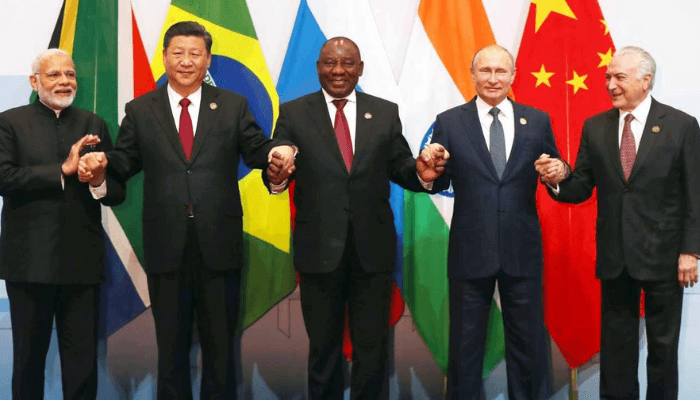
The original BRICS members are Brazil, Russia, India, China, and South Africa.
The geographic reach of the programme is national in scope. The NDB said the programme would benefit Buffalo City, Cape Town, Ekurhuleni, eThekwini, Johannesburg, Mangaung, Nelson Mandela Bay, and Tshwane, municipalities that collectively account for a substantial share of the country's economic output and population. Together, these eight metros represent the commercial and industrial backbone of South Africa, making the state of their water, power, and waste systems a matter of national economic consequence rather than purely local concern.
The loan is structured to do more than simply hand over capital. The reforms are backed by R54 billion in performance-linked grants designed to encourage municipalities to ring-fence revenues for infrastructure spending, to mobilise up to R100 billion in additional investment. That structure ties disbursement to municipal financial discipline, an explicit response to years of complaints that revenue collected for infrastructure maintenance has too often been diverted elsewhere.
The NDB's growing footprint in South Africa reflects its broader ambitions across the bloc. The NDB, headquartered in Shanghai and led by former Brazilian president Dilma Rousseff, has become an increasingly important source of development financing for BRICS members and emerging economies. Since its founding in July 2015, the bank's total project approvals had reached $39 billion by the end of 2024, a figure that rivals long-standing multilateral lenders despite its comparatively small membership.
The South Africa facility adds to a growing pipeline of infrastructure projects financed by the bank in the country. In December, the NDB approved $200 million for the Limpopo Academic Hospital project, which will fund the construction of a 488-bed teaching hospital in Polokwane.
For South African households who have endured years of intermittent water supply, sewage spills, and rolling power cuts, the test of this $1 billion facility will not be its approval. It will be whether municipal governments, many with troubled track records on financial management, can actually convert the funding into pipes that do not burst and grids that do not fail.
Stay Informed: Visit our website for Breaking News, Intelligence, and Insight.