
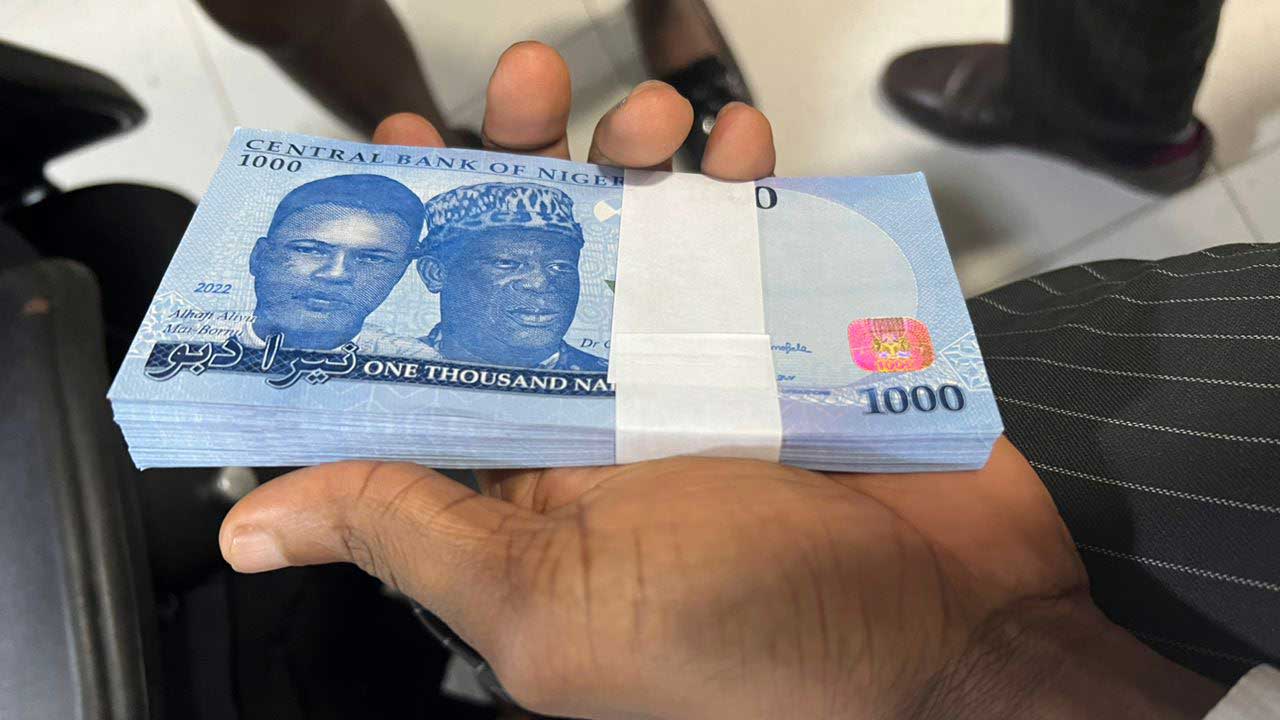
Nigeria has built one of Africa's most impressive digital payment ecosystems. It has not yet convinced most Nigerians to trust it with their cash.
Currency outside Nigeria's banking system stood at ₦5.19 trillion in February 2026, the same month the Central Bank of Nigeria cut its Monetary Policy Rate to 26.5%. By April 2026, the figure had eased slightly to ₦5.08 trillion, representing more than 90% of the ₦5.64 trillion in total currency circulating in the economy. In practical terms, about nine out of every 10 naira notes in circulation are being held outside the formal banking system.
Currency outside banks rose by ₦515.58 billion from ₦4.57 trillion in April 2025 to ₦5.08 trillion in April 2026, representing an 11.29% year-on-year increase. The trajectory is a direct rebuke to years of cashless policy ambition, arriving precisely as digital payment volumes are hitting record highs.
The structural drivers behind the cash preference are well documented and stubbornly persistent. Weak banking penetration, unreliable network infrastructure, transaction failures, cybersecurity fears, and poor digital understanding continue to shape public confidence in formal financial systems. Rising cases of kidnapping, armed robbery, attacks on businesses, and general insecurity have also made banks increasingly reluctant to invest in new branches and ATM infrastructure, particularly in emerging communities and semi-urban areas.
Former Chief Economist at Zenith Bank Plc, Marcel Okeke, said the build-up to the 2027 general elections is one factor driving cash hoarding, as political financing traditionally flows through informal cash channels ahead of election cycles. Memories of the 2023 naira redesign crisis, which left millions of Nigerians unable to access their own money, have also deepened institutional distrust that digital adoption alone cannot easily repair.
When President Bola Tinubu took office in June 2023, the ratio of cash outside banks stood at 86.9%. By April 2026, it had risen again to 90.1%, suggesting that many Nigerians have returned to their long-standing preference for holding cash.
The CBN has acknowledged the challenge directly. CBN Governor Olayemi Cardoso expressed disappointment that sellers refused cash transfers during the recent Sallah celebration, insisting on cash as a mode of payment, and said the objective under the Payments System Vision 2028 is to reduce cash circulating outside the formal banking system to below 40% of total circulation while deploying up to 10 million QR-enabled payment points across markets, transport hubs, and rural communities.
For many Nigerians, especially in low-income communities, POS agents have effectively become the face of the financial system. However, while agent banking has improved transaction reach, it has not replaced the broader functions of formal banking infrastructure, with most agents primarily handling withdrawals, transfers, and airtime purchases.
The numbers tell two stories simultaneously. Digital payments are surging, with electronic transactions hitting hundreds of trillions of naira in quarterly value. And yet cash outside banks is growing in both absolute value and as a share of total circulation. Nigeria is not choosing between cash and digital. It is running both systems in parallel, with the formal banking sector capturing a shrinking slice of the physical money in the economy. Closing that gap by 2028 requires more than payment infrastructure. It requires a level of trust that policy alone cannot mandate into existence.
Stay Informed: Visit our website for Breaking News, Intelligence, and Insight.