
A single number from the IMF has ignited the most consequential public finance controversy of Nigeria's reform era, and the government's pushback has done little to quiet it.
The International Monetary Fund has raised concerns over Nigeria's fiscal transparency, disclosing that about 2% of the country's Gross Domestic Product, estimated at ₦8.83 trillion, was omitted from recent official budget documents. The disclosure has triggered a political firestorm, forcing the Finance Ministry into a weekend defence of the government's accounting practices.
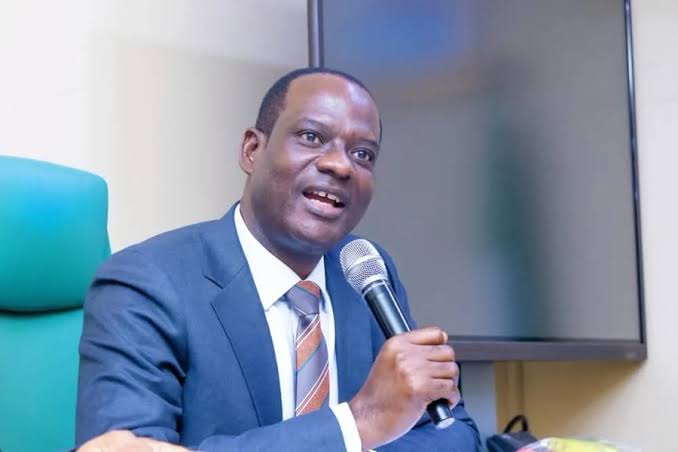
IMF Resident Representative in Nigeria, Christian Ebeke, stated that the unreported spending was largely tied to major government projects executed outside the budget framework, making it more difficult to accurately assess the country's fiscal position and the scale of public investment. In his own words: "So far, we think that there are about 2% of GDP of expenditure that were not reported that should be reported and should be recorded, so that this statistical discrepancy will disappear."
The IMF said the unreported expenditure has created a significant gap between Nigeria's reported fiscal deficit and its actual financing requirements, making government borrowing appear lower than it truly is. That distortion matters enormously at a moment when Nigeria is simultaneously borrowing at a record pace, spending 53% of federal revenues on debt service, and asking international creditors for continued confidence in its fiscal trajectory.
The Federal Government dismissed reports that it spent more than ₦8 trillion outside the 2026 approved budget, describing the claims as inaccurate and a misrepresentation of the IMF's 2026 Article IV Consultation Report. Finance Minister Taiwo Oyedele said the government does not operate a shadow budget, insisting that all federal spending is undertaken within constitutional and statutory provisions, including Appropriation Acts, Supplementary Appropriation Acts, statutory transfers and other mechanisms approved by the National Assembly.
The ministry further clarified that the IMF's observations concern the comprehensiveness and presentation of fiscal reporting rather than the legality of government expenditure, adding that ongoing reforms aim to harmonise Nigeria's budget framework with international reporting standards.
The opposition read the IMF's finding very differently. Atiku urged anti-corruption agencies and oversight institutions, including the EFCC, ICPC, the National Assembly and the Office of the Auditor-General for the Federation, to launch a thorough investigation into the alleged unreported spending. Peter Obi also reacted, saying the report reinforced concerns about transparency and accountability in the management of public finances, describing the development as further evidence of what he termed "grand corruption" under the current administration.
The IMF representative acknowledged that the Federal Government has begun taking steps to address the problem through legislative reforms aimed at bringing previously unreported expenditures within the formal budget framework, but stressed that such reforms must be accompanied by timely and comprehensive budget implementation reports.
The dispute ultimately hinges on a distinction the government wants the public to accept and the public is struggling to make: the difference between spending that is technically legal under Nigeria's layered statutory framework and spending that is fully visible to citizens, legislators, and creditors.
Improving fiscal transparency, the IMF stressed, is critical, noting that expenditures outside the formal budget process undermine effective oversight and public accountability. Whether Abuja's reporting reforms can close that gap before the 2027 election cycle intensifies the political temperature is now the central question in Nigeria's public finance debate.
Stay Informed: Visit our website for Breaking News, Intelligence, and Insight.