
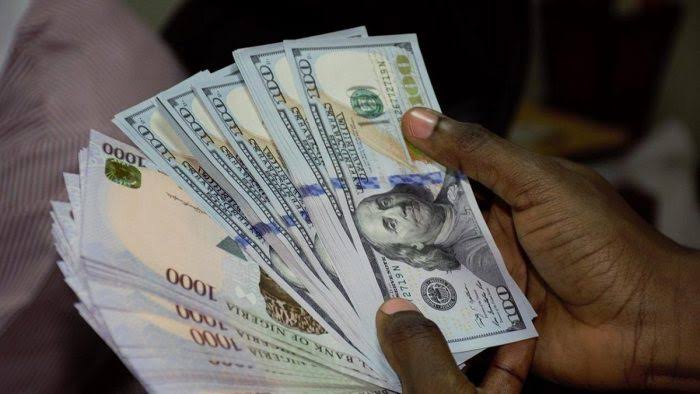
The naira's brief spell of relative strength has hit a wall, with the currency retreating to its weakest official market rate in four weeks as renewed dollar demand weighed on the local unit heading into the final trading days of June.
The naira opened the week on a negative note on Monday after it depreciated against the US dollar in the Nigerian Autonomous Foreign Exchange Market by 0.86% or ₦11.77, to sell for ₦1,373.16/$ compared with the previous close. The reading represents the naira's softest official market position since late May, erasing a significant portion of the gains accumulated through the second week of June.
At the parallel market, the dollar was exchanging hands at ₦1,395 for selling and ₦1,385 for buying as of June 23, 2026, a spread of roughly ₦22 over the official rate that analysts are watching closely after weeks when the gap had narrowed substantially.
The recent trajectory tells the full story of the naira's choppy June. The exchange rate fluctuated between a high of ₦1,380.07 on June 22 and a low of ₦1,361.16 on June 18 during the past trading week, with the largest single-day price movement occurring on June 18. The currency had traded as comfortably as ₦1,357 per dollar earlier in the month before seasonal and structural demand pressures reasserted themselves.
The four-week low is all the more striking because it arrives against a backdrop of exceptional reserve strength. Nigeria's external reserves stood at $50.81 billion as of June 15, 2026, a 17-year high that would ordinarily provide more than sufficient ammunition for the CBN to defend the currency. The divergence between a strong reserve position and a weakening spot rate points to demand-side factors rather than any structural deterioration in FX supply.
Analysts point to a familiar seasonal mix: corporate dollar demand for end-of-month obligations, school fees payments ahead of the new academic year, and rising import demand from manufacturers rebuilding inventory after months of supply chain caution.
The CBN has maintained its tight monetary policy stance specifically to anchor exchange rate stability. The naira closed May 2026 at ₦1,372/$, compared to ₦1,585.50/$ in May 2025, a year-on-year improvement of more than 13% that remains the most important context for any single-week pullback.
The one-week retreat to ₦1,373/$ does not reverse the 2026 story of naira stabilization. It does serve as a reminder that stability and strength are not the same thing, and that without a sustained structural improvement in domestic dollar supply from oil production and non-oil exports, every week of calm in the FX market carries the seeds of the next episode of pressure.
Stay Informed: Visit our website for Breaking News, Intelligence, and Insight.