
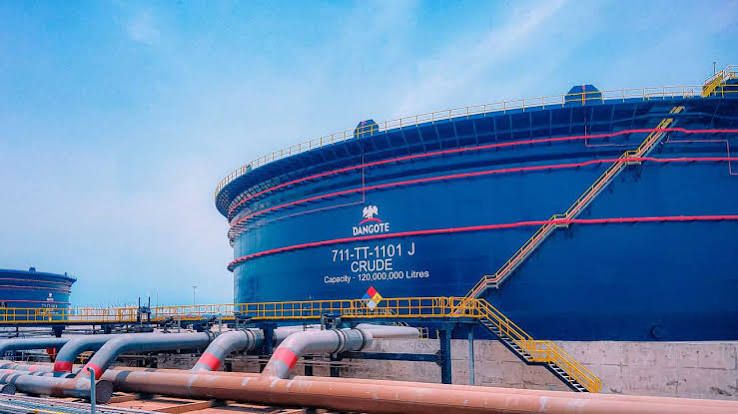
A shipping data analysis revealing that Nigerian marketers are importing Dangote-produced fuel back into Nigeria via Togo's offshore trading hub has triggered a sharp denial from the refinery itself, escalating one of the most commercially loaded disputes in Nigeria's downstream sector this year.
Dangote Petroleum Refinery has strongly denied allegations that its petroleum products are being exported to Lomé, Togo, and later re-imported into Nigeria, describing the claims as "unsubstantiated" and "a tissue of lies," insisting there is no commercial or operational basis for such transactions.
The controversy originated from findings presented at a webinar organised by the Major Energies Marketers Association of Nigeria on June 19. Matthew Tracey-Cook of S&P Global Energy disclosed that Nigerian fuel marketers are increasingly importing refined petroleum products originally produced at the Dangote Refinery through the offshore ship-to-ship trading hub in Lomé, Togo, with the refinery's products accounting for between 70% and 80% of waterborne fuel volumes imported into Nigeria between March and May 2026.
Dangote's management challenged both the data and the logic. The refinery said its sales contracts and tender agreements expressly prohibit the resale or re-importation of its products into Nigeria, and argued that the economics of such a trade route make no business sense, noting that transporting products from the refinery to Lomé and back into Nigeria would cost between $82 and $90 per metric tonne, significantly reducing profit margins and rendering the transaction commercially unviable.
The refinery also argued that facilitating imports that compete directly with its own domestic production would be fundamentally self-defeating, given that its core commercial objective is to establish and maintain a leading position as a supplier of petroleum products to the Nigerian market.
The company added that it maintains comprehensive records of all product sales, including loading locations, nominated vessels, counterparties, and destination declarations, while compliance procedures are in place to enforce contractual restrictions on re-importation.
The dispute carries a pricing dimension that predates the S&P Global analysis. Some fuel importers had alleged in November 2025 that Dangote sells petrol to international traders at ₦65 cheaper per litre than the price offered to domestic marketers in Nigeria, creating the arbitrage incentive that makes the Lomé route commercially attractive to some operators.
NBS foreign trade data shows Nigeria exported petrol worth ₦105.5 billion to Togo in Q1 2026, confirming the scale of the westward flow of Dangote-produced fuel before any return journey is considered.
Dangote's management declined to identify the source of the claims directly but characterised them as motivated by commercial or political interests hostile to the refinery's growing market presence. The refinery that spent years fighting for the right to compete with importers is now fighting the narrative that it has become one.
Stay Informed: Visit our website for Breaking News, Intelligence, and Insight.