
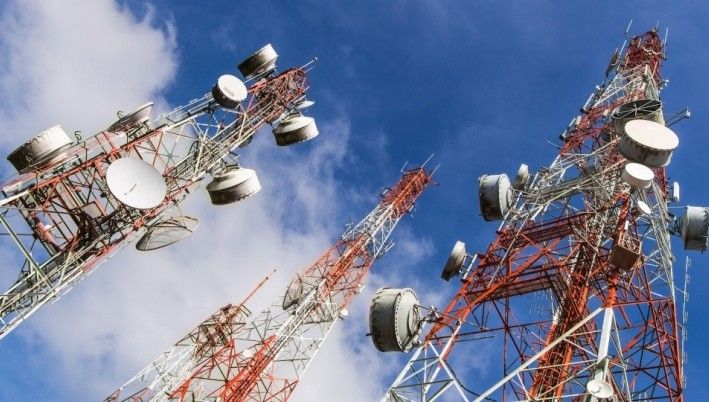
Africa has largely solved the problem of building mobile networks. It has not yet solved the harder problem of getting people to actually use them, and that gap now stands between the continent and one of its largest economic opportunities of the decade.
Mobile technologies and services contributed $240 billion to Africa's economy in 2025, equivalent to 7.8% of GDP, according to the GSMA's Mobile Economy Africa 2026 report. Mobile's economic contribution is forecast to reach $290 billion by 2030. The mobile ecosystem supported approximately 13 million jobs in 2025, and the sector generated $45 billion in public revenues.
The headline finding of the report is a deliberate reframing of where Africa's digital challenge actually sits. Despite widespread network availability, the report argues that Africa's largest digital barrier is no longer coverage. Mobile broadband networks now reach most of the population, yet approximately 63% of Africans live within coverage areas but do not use mobile internet, compared with only 9% who remain outside broadband coverage entirely.
The report identifies affordability as the biggest barrier to adoption, alongside digital skills gaps and broader social constraints. GSMA said improving device affordability and expanding digital capabilities will be critical to closing the usage gap.
GSMA Director General Vivek Badrinath framed the moment as an inflection point for an industry that has spent a decade focused on a different problem. "Africa's mobile industry is entering a new phase of development. Having connected millions of people and businesses over the last decade, the focus is increasingly shifting towards unlocking greater value through AI, digital services, and new forms of innovation. Realising this opportunity will require continued investment, policies that encourage innovation, and a shared commitment to ensuring that everyone can" benefit, he said.
Operators themselves appear to be recalibrating their business models around this shift. Operators are increasingly positioning themselves as digital transformation partners rather than traditional connectivity providers. Across the continent, operators are evolving beyond their traditional role to deploy artificial intelligence, expand digital services, and open network capabilities to developers through standardised APIs, with 79% of operators in Africa identifying this transformation as a core strategic objective.
The investment commitment underpinning this transition remains substantial. Mobile operators are expected to invest over $76 billion in network infrastructure between 2024 and 2030. The effectiveness of this investment will depend on supportive regulatory frameworks, lower rights-of-way costs, infrastructure sharing policies, and predictable investment conditions, with infrastructure sharing increasingly viewed as a viable solution for extending coverage to underserved and rural areas where standalone investments may not be commercially sustainable.
The technology pathway is also evolving. 5G penetration in Africa is projected to reach 21% of total mobile connections by 2030, supported by continued 4G expansion and accelerating 5G deployments in key markets, with Mauritius expected to lead 5G growth on the continent.
The arithmetic behind GSMA's $290 billion forecast is straightforward in theory and difficult in execution. Africa already has the towers, the spectrum, and the coverage to reach the vast majority of its population. What it does not yet have, for 63% of connected Africans, is a reason or a means to actually go online. Closing that gap, more than any new infrastructure rollout, is what will determine whether the $290 billion figure becomes reality or remains a forecast.
Stay Informed: Visit our website for Breaking News, Intelligence, and Insight.