
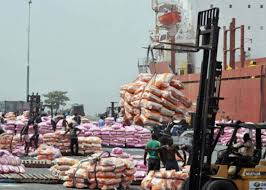
Nigeria's food and beverage import bill has declined sharply in the first quarter of 2026, a development that sits within a broader import contraction that has delivered one of the country's strongest trade surpluses in years.
Agricultural goods imported into Nigeria in Q1 2026 stood at ₦827.72 billion, a 20.09% decrease compared to ₦1.03 trillion recorded in Q1 2025, and a steep 42.39% decline from the ₦1.43 trillion registered in Q4 2025. Prepared foodstuffs, beverages, spirits, and vinegar, in a separate import category, were valued at ₦745.74 billion, further illustrating the pullback in food-related import spending.
The sector-specific decline is part of a dramatic nationwide import compression. Total merchandise imports fell to ₦13.62 trillion in Q1 2026, down 18.17% from ₦16.64 trillion in Q1 2025 and 21.05% below the ₦17.25 trillion recorded in Q4 2025. The collapse in import spending, combined with a ₦21.17 trillion export outturn, pushed Nigeria's trade surplus to ₦7.55 trillion, a 340.88% increase from the preceding quarter and one of the strongest quarterly trade performances in recent memory.
The primary driver of the import decline was a sharp drop in petroleum product imports, a direct consequence of the Dangote Refinery ramping up to full capacity and beginning domestic supply of refined products. Other petroleum product exports surged 51.49% year-on-year to ₦6.78 trillion, as the refinery's jet fuel, diesel, and gasoline output displaced both domestic demand for imported fuel and opened new export channels.
The food import pullback reflects a more complex set of pressures. Nigeria's food import bill reached ₦7.65 trillion in 2025, with processed food and beverage imports representing the largest share at ₦4.17 trillion, much of it absorbed by industrial users rather than households. The Q1 2026 decline suggests that a combination of naira stability, improved domestic food supply from agriculture's 3.15% growth, and subdued household purchasing power is collectively reducing the volume of food imports clearing Nigerian ports.
Machinery and transport equipment remained Nigeria's largest import category in Q1 2026 at ₦5.01 trillion, accounting for 36.79% of total imports, suggesting that capital goods spending is being prioritised even as consumer goods imports contract.
China remained Nigeria's leading import partner, supplying goods worth ₦5.09 trillion, followed by the United States, India, Germany, and the United Arab Emirates.
The food import decline is a double-edged signal. For policymakers, it validates the agriculture reform agenda and suggests domestic production is beginning to substitute for some imported food categories.
For food manufacturers dependent on imported industrial inputs, such as wheat, starch, flavourings, and packaging materials, the tighter import environment adds cost pressure that ultimately filters through to consumer prices. The Q1 2026 data shows the direction of travel. Whether the trend deepens in H2 will depend on harvest performance, currency stability, and whether the domestic food processing sector can scale fast enough to fill the gap.
Stay Informed: Visit our website for Breaking News, Intelligence, and Insight